Resources
Resources
How to stay focused as you age

Anna F
|

Do you ever look back on your life and think: “wow, I used to be so much more productive?”
No matter your age, you might recall an earlier time in life when you had less responsibilities, needed less sleep, or even felt supernaturally compelled to do creative projects…
As we age, many of us feel frustration — and even a sense of shame-based nostalgia — when our ability to focus and get stuff done becomes more challenging.
Sometimes we compare ourselves to people who are a different age than us (or even to ourselves when we were younger and had fewer things on our plate).
Comparison can lead us to spiral about not meeting a generally unsustainable high bar of endless energy, achievement, and hyperfocus.
Each stage in our lives has its strengths, and no stage is without challenges — this is strangely good to hear for those of us no longer even remotely close to our 20s! 😜
Research has shown that many challenges related to focus and attention stem from the specific stage of life we’re in. On the flip side, these stages (and their challenges) are valuable times of learning and growth.
When we are able to experience each stage of life — with its unique challenges and joys — we not only feel more peace, but we are better equipped for the phases to come.
This week, we’ll be honing in on the unique strengths and challenges of different life phases (our 20s, 30s, 40s, 50s), and how these can affect our ability to focus.
The Roaring 20's
While our twenties can bring a lot of fun, possibility, and new experiences, scientifically and sociologically, they are actually a pretty challenging decade that can uniquely tax our cognition and focus.
Doing things for the first time usually brings challenges, and our twenties are full of “firsts,” whether our first career-track job, apartment, or long-term relationship.
Until our mid-twenties, our prefrontal cortexes may still be developing, which in itself causes distractibility.
Adding to this, many of us are responsible for our own work, sleep, and meal rhythms for the first time — with rocky results that can lead to focus issues and brain fog.
Finally, people in their twenties often experience dependence on dopamine hits from social media, as well as habitual digital multi-tasking, both of which have been shown to shorten attention spans.
In addition, social-media fueled comparison, FOMO (fear of missing out), and pressure to choose a career can cause “decision paralysis,” as well as shame, further impacting the ability to focus.
All of that said, in our late 20s, we also have high neuroplasticity, allowing for efficient rewiring, learning, and strengthening of connections, making this a great time to learn complex skills and lifelong habits.
Tips for focus in our 20s (and beyond)
💪🏼 Get “Off Zero”: Encourage taking action and experimentation rather than staying stuck in planning mode.
🏃🏻♀️🥬👯♀️ Prioritize Physical and Mental Health: Treat sleep, exercise, and diet as high-priority appointments to build stamina for long-term goals, rather than things you only do once in a while to reset.
📆 Create Structure: Co-work for a set time, with breaks (join a focused space session!)
The Busy 30's
Now we've entered a time warp to our 30s — a stage that can feel “peak” in many ways, but has plenty of focus-stealing challenges.
In our 30s, many experience greater stability, having often chosen a career or living situation, and are more deeply tending to committed relationships and friendships.
However, the fullness of these times can lead to overwhelm, over-commitment, and issues with focus, as we juggle work, relationships/dating, and for many, children.
This juggling also happens at a time when, compared to the previous decade, our brain’s processing speeds have started to slow, and hormones can shift, including postpartum for some of us. All of these biological changes can affect focus.
As responsibilities grow, self-care can often shrink, leading to poor diet, loss of sleep, and less physical activity, all of which can cause brain fog and issues with focus.
Finally, environmental and digital overload, in the form of endless notifications and context switching, or rapidly moving between tasks (e.g,. Slack messages, meetings, deep work, children’s needs) drains mental energy.
Tips for focus in our 30s (and beyond)
😴 Prioritize Sleep: Aim for 7-9 hours of high-quality sleep, with a screen-free wind-down routine.
🏃🏻♀️ Move Regularly: Take breaks every 30 minutes to walk, stretch, or stand. Aim for 150 minutes of exercise per week.
🧘🏽♀️ Manage Stress: Utilize mindfulness, meditation, or deep breathing exercises to lower cortisol. Cortisol is sneaky and adds up!
The Transformative 40's
Let's move into our 40s, a potent time that, according to renowned psychoanalyst Carl Jung, is when “Life really begins. Up until then you are just doing research.”
In addition to the “realness” of our 40s, in every sense of the word, many of the same issues we talked about for our 30s apply.
Some even more so, including changing brains and bodies, multiple responsibilities, and sliding foundational habits for wellbeing.
In addition, people in their 40s are often called the "Sandwich Generation” — meaning they are balancing careers, children, and aging parents.
This often leads to high levels of stress, information overload, and extreme multi-tasking, all of which can impair focus.
At the same time, in our 40s, women can experience hormonal changes due to perimenopause, leading to often extreme sleep interruptions, emotional turbulence, and poor focus.
On the other hand, some have described our 40s, especially for women, as a transformational time that can feel more intense than puberty, or similar to the transformation from caterpillar to butterfly.
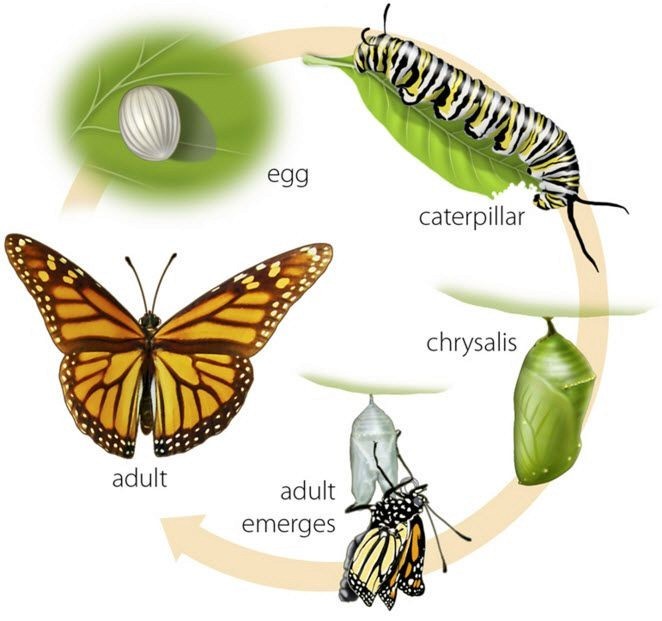
This could be you
In case the metaphor resonates, the chrysalis “goo” phase is certainly not easy, but is also part of the transformational process, and there is a “rebirth” on the other side.
Tips for focus in our 40s (and beyond)
😴🏃🏻♀️ Again: Prioritize Sleep, Manage Stress, Get Regular Exercise.
🍣 🥬 Eat for Brain Health: Eat anti-oxidant rich fruits & vegetables, and omega 3 fatty acids.
🩺 See a Doctor: If symptoms are severe or persistent. Don’t just wait for things to go away.
The Grounded 50's
First, the good news: emotional regulation, and compassion are stronger for people in their 50s than in previous decades, overall.
For those whose children are older or out of the house, there may also be less responsibility for others, offering space and time — a gift that may also lead to some feeling unfocused as they search for meaning in this new, empty-nest stage.
Even for those without children, a search for meaning in a time that is beyond biological fertility may be a source of stress, leading to challenges with focus.
Our brains are also changing, including the effects of a weakening Locus Coeruleus — a small region of the brainstem that helps filter out distractions — can cause stress and distractibility. Hormones related to perimenopause and menopause may also be affecting focus for women.
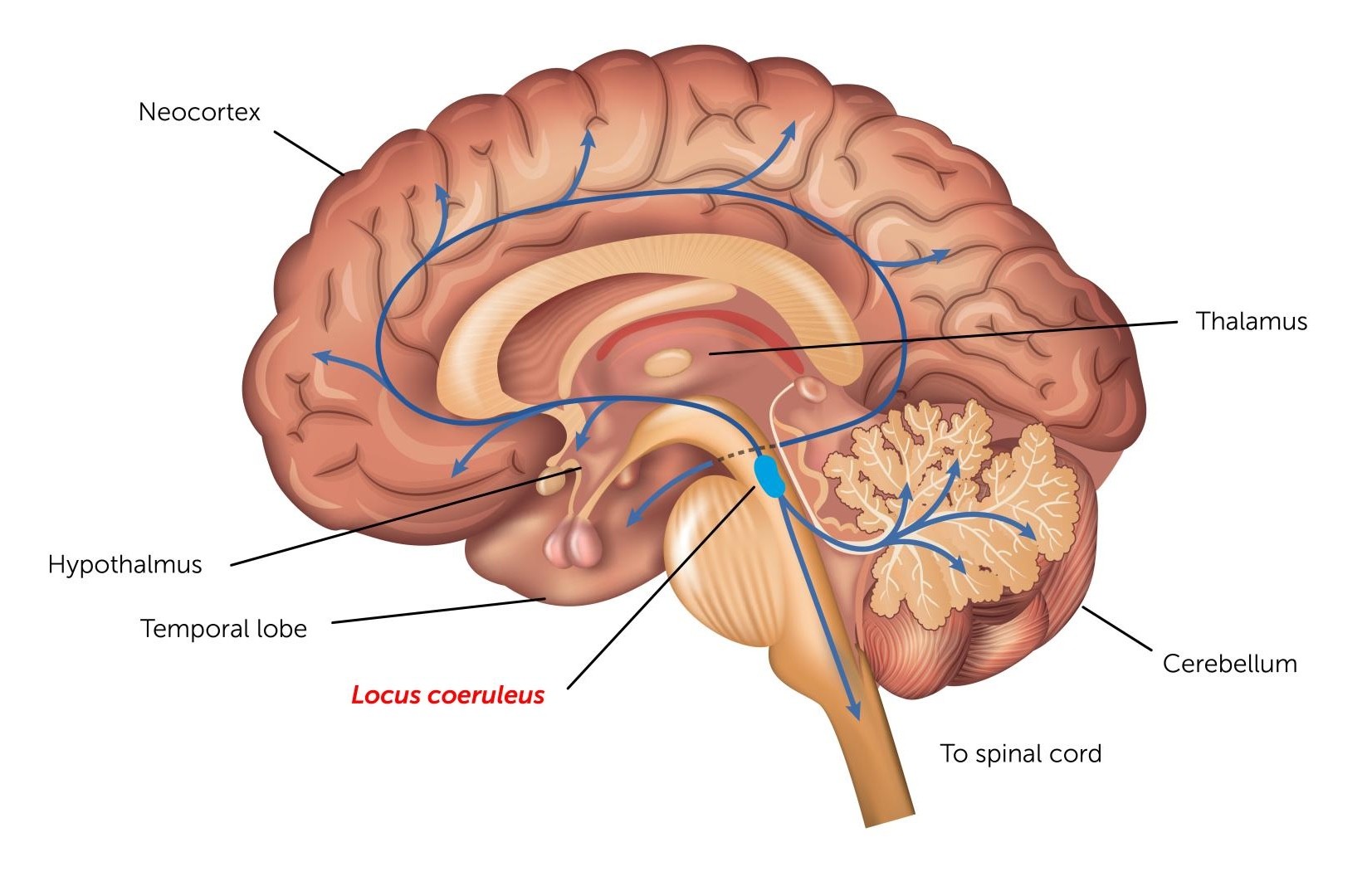
Here's where it is, in case you were wondering…
But our main takeaway message is this: our 50s are a time when many of us have greater self-awareness and acceptance than at any other point in our lives.
Oprah calls this era “turning your wounds into wisdom.” It can be a gift that we give others as mentors, teachers, or just good friends.
Tips for focus in our 50s (and beyond)
🧩🎹🥁 Mental Stimulation: Challenge your brain with new, difficult tasks — like learning a language, musical instrument, or new hobby.
📊 Manage Health Markers: Keep blood pressure, cholesterol, and blood sugar in check to prevent cognitive decline.
💞 Social Connection: Loneliness impacts our mental and physical health. Call or text friends whenever you get the blues.
✧˖°. ⋆。˚:✧。
We hope you learned some new ways to find focus at any age! Whether you're in your 20s and trying to figure it all out… or in your 40s and also still trying to figure it all out… thanks for joining us.
P.S. At Focused Space, our community is full of people who work from home, entrepreneurs, designers, creatives, writers, and ADHD folks who are working on their goals each day, together.
If you aren't a member of Focused Space, but could use help accomplishing your goals, busting through procrastination, or getting motivated… you are welcome to join us at one of our live guided work sessions, or morning planning sessions!
Take care,
— Anna and the focused space team
Do you ever look back on your life and think: “wow, I used to be so much more productive?”
No matter your age, you might recall an earlier time in life when you had less responsibilities, needed less sleep, or even felt supernaturally compelled to do creative projects…
As we age, many of us feel frustration — and even a sense of shame-based nostalgia — when our ability to focus and get stuff done becomes more challenging.
Sometimes we compare ourselves to people who are a different age than us (or even to ourselves when we were younger and had fewer things on our plate).
Comparison can lead us to spiral about not meeting a generally unsustainable high bar of endless energy, achievement, and hyperfocus.
Each stage in our lives has its strengths, and no stage is without challenges — this is strangely good to hear for those of us no longer even remotely close to our 20s! 😜
Research has shown that many challenges related to focus and attention stem from the specific stage of life we’re in. On the flip side, these stages (and their challenges) are valuable times of learning and growth.
When we are able to experience each stage of life — with its unique challenges and joys — we not only feel more peace, but we are better equipped for the phases to come.
This week, we’ll be honing in on the unique strengths and challenges of different life phases (our 20s, 30s, 40s, 50s), and how these can affect our ability to focus.
The Roaring 20's
While our twenties can bring a lot of fun, possibility, and new experiences, scientifically and sociologically, they are actually a pretty challenging decade that can uniquely tax our cognition and focus.
Doing things for the first time usually brings challenges, and our twenties are full of “firsts,” whether our first career-track job, apartment, or long-term relationship.
Until our mid-twenties, our prefrontal cortexes may still be developing, which in itself causes distractibility.
Adding to this, many of us are responsible for our own work, sleep, and meal rhythms for the first time — with rocky results that can lead to focus issues and brain fog.
Finally, people in their twenties often experience dependence on dopamine hits from social media, as well as habitual digital multi-tasking, both of which have been shown to shorten attention spans.
In addition, social-media fueled comparison, FOMO (fear of missing out), and pressure to choose a career can cause “decision paralysis,” as well as shame, further impacting the ability to focus.
All of that said, in our late 20s, we also have high neuroplasticity, allowing for efficient rewiring, learning, and strengthening of connections, making this a great time to learn complex skills and lifelong habits.
Tips for focus in our 20s (and beyond)
💪🏼 Get “Off Zero”: Encourage taking action and experimentation rather than staying stuck in planning mode.
🏃🏻♀️🥬👯♀️ Prioritize Physical and Mental Health: Treat sleep, exercise, and diet as high-priority appointments to build stamina for long-term goals, rather than things you only do once in a while to reset.
📆 Create Structure: Co-work for a set time, with breaks (join a focused space session!)
The Busy 30's
Now we've entered a time warp to our 30s — a stage that can feel “peak” in many ways, but has plenty of focus-stealing challenges.
In our 30s, many experience greater stability, having often chosen a career or living situation, and are more deeply tending to committed relationships and friendships.
However, the fullness of these times can lead to overwhelm, over-commitment, and issues with focus, as we juggle work, relationships/dating, and for many, children.
This juggling also happens at a time when, compared to the previous decade, our brain’s processing speeds have started to slow, and hormones can shift, including postpartum for some of us. All of these biological changes can affect focus.
As responsibilities grow, self-care can often shrink, leading to poor diet, loss of sleep, and less physical activity, all of which can cause brain fog and issues with focus.
Finally, environmental and digital overload, in the form of endless notifications and context switching, or rapidly moving between tasks (e.g,. Slack messages, meetings, deep work, children’s needs) drains mental energy.
Tips for focus in our 30s (and beyond)
😴 Prioritize Sleep: Aim for 7-9 hours of high-quality sleep, with a screen-free wind-down routine.
🏃🏻♀️ Move Regularly: Take breaks every 30 minutes to walk, stretch, or stand. Aim for 150 minutes of exercise per week.
🧘🏽♀️ Manage Stress: Utilize mindfulness, meditation, or deep breathing exercises to lower cortisol. Cortisol is sneaky and adds up!
The Transformative 40's
Let's move into our 40s, a potent time that, according to renowned psychoanalyst Carl Jung, is when “Life really begins. Up until then you are just doing research.”
In addition to the “realness” of our 40s, in every sense of the word, many of the same issues we talked about for our 30s apply.
Some even more so, including changing brains and bodies, multiple responsibilities, and sliding foundational habits for wellbeing.
In addition, people in their 40s are often called the "Sandwich Generation” — meaning they are balancing careers, children, and aging parents.
This often leads to high levels of stress, information overload, and extreme multi-tasking, all of which can impair focus.
At the same time, in our 40s, women can experience hormonal changes due to perimenopause, leading to often extreme sleep interruptions, emotional turbulence, and poor focus.
On the other hand, some have described our 40s, especially for women, as a transformational time that can feel more intense than puberty, or similar to the transformation from caterpillar to butterfly.
This could be you
In case the metaphor resonates, the chrysalis “goo” phase is certainly not easy, but is also part of the transformational process, and there is a “rebirth” on the other side.
Tips for focus in our 40s (and beyond)
😴🏃🏻♀️ Again: Prioritize Sleep, Manage Stress, Get Regular Exercise.
🍣 🥬 Eat for Brain Health: Eat anti-oxidant rich fruits & vegetables, and omega 3 fatty acids.
🩺 See a Doctor: If symptoms are severe or persistent. Don’t just wait for things to go away.
The Grounded 50's
First, the good news: emotional regulation, and compassion are stronger for people in their 50s than in previous decades, overall.
For those whose children are older or out of the house, there may also be less responsibility for others, offering space and time — a gift that may also lead to some feeling unfocused as they search for meaning in this new, empty-nest stage.
Even for those without children, a search for meaning in a time that is beyond biological fertility may be a source of stress, leading to challenges with focus.
Our brains are also changing, including the effects of a weakening Locus Coeruleus — a small region of the brainstem that helps filter out distractions — can cause stress and distractibility. Hormones related to perimenopause and menopause may also be affecting focus for women.
Here's where it is, in case you were wondering…
But our main takeaway message is this: our 50s are a time when many of us have greater self-awareness and acceptance than at any other point in our lives.
Oprah calls this era “turning your wounds into wisdom.” It can be a gift that we give others as mentors, teachers, or just good friends.
Tips for focus in our 50s (and beyond)
🧩🎹🥁 Mental Stimulation: Challenge your brain with new, difficult tasks — like learning a language, musical instrument, or new hobby.
📊 Manage Health Markers: Keep blood pressure, cholesterol, and blood sugar in check to prevent cognitive decline.
💞 Social Connection: Loneliness impacts our mental and physical health. Call or text friends whenever you get the blues.
✧˖°. ⋆。˚:✧。
We hope you learned some new ways to find focus at any age! Whether you're in your 20s and trying to figure it all out… or in your 40s and also still trying to figure it all out… thanks for joining us.
P.S. At Focused Space, our community is full of people who work from home, entrepreneurs, designers, creatives, writers, and ADHD folks who are working on their goals each day, together.
If you aren't a member of Focused Space, but could use help accomplishing your goals, busting through procrastination, or getting motivated… you are welcome to join us at one of our live guided work sessions, or morning planning sessions!
Take care,
— Anna and the focused space team
Join our community
✨ Bust through procrastination with our inspiring community ✨
Tap more to learn about focused space
Join our community
✨ Bust through procrastination with our inspiring community ✨
Tap more to learn about focused space
Join our community
✨ Bust through procrastination with our inspiring community ✨