Why the 'Wise Mind' method can help you make better decisions

Darya S
|
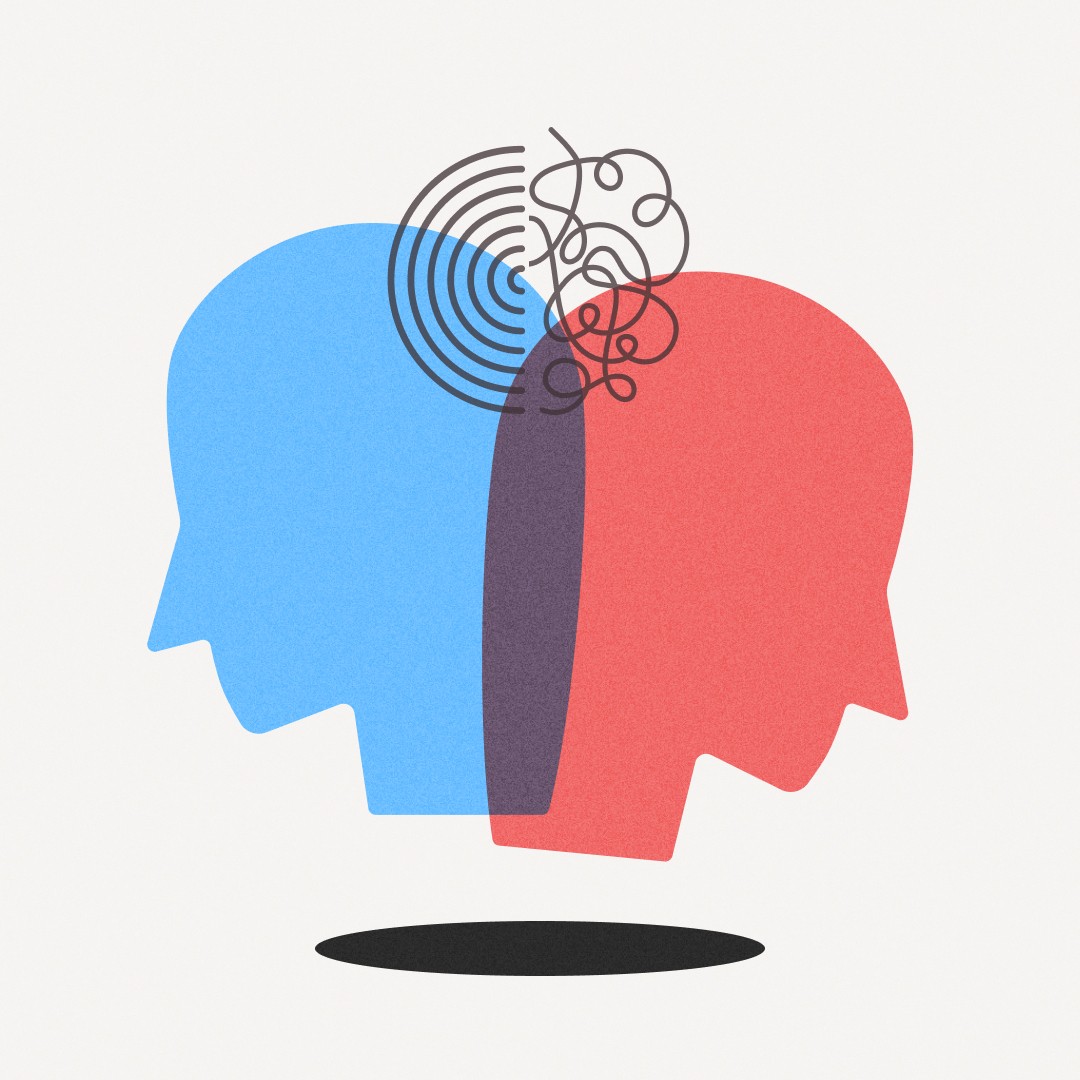
When faced with making decisions, do you tend to push your emotions to the side — focusing on the cold hard facts, but neglecting what’s meaningful to you?
Or by contrast, do you let your feelings run the show — getting caught up in urgency, but brushing off potential consequences?
Many of us naturally lean toward being a “thinker” or a “feeler,” but problems often arise when one side takes over completely.
This week, we’ll learn about the “Wise Mind” method, a tool from the field of DBT that helps us integrate both logic and emotion when making decisions.
If you identify as a "Thinker"…
This section is for all of my “thinkers” out there!
How did you come to rely on your rational brain more than your emotions?
Maybe you grew up in a culture that equates good decision-making with being rational, calm, and unemotional?
Maybe you were praised for “thinking things through” and subtly discouraged from letting feelings guide you?
Whatever the reason, you may have come to learn that your emotions are unreliable, or even dangerous to listen to when making important choices.
If this resonates with you, try leaning into your “Wise Mind” by giving your emotions space to speak.
Instead of brushing feelings aside or judging them, try pausing and acknowledging what’s coming up.
Emotions often signal what matters, what feels unsafe, or what you need more of — and Wise Mind knows that ignoring those signals usually leads to misaligned decisions.
At the same time, Wise Mind doesn’t let emotions drive unchecked.
It listens without reacting immediately. When you slow down and say, “I notice I’m feeling this, let me sit with it for a moment,” you’re already practicing Wise Mind.
You’re honoring emotion while creating room for thoughtful choice.
If you identify as a "Feeler"…
Our last section was for the self-described “thinkers” in our community. We shared the benefits of slowing down to check-in with your emotions, and not simply relying on logic to get through a decision.
But what if you're a "feeler" instead?
As implied by the name, feelers typically feel their emotions quickly and use that to guide their actions and decisions.
As we discussed, this can be a strength in that our emotions help us stay connected to what’s important to us.
However, it’s important to remember that rational thinking plays an essential role in our lives as well, such as planning for the future and making choices that align with our current resources and long-term goals.
In order to practice using our “Wise Mind,” we want to invite our rational brain into the conversation.
This is where we step back, look at the facts, and consider consequences.
This is NOT in order to override our feelings, but to support them. Logic helps us understand what’s realistic, sustainable, and aligned with our long-term goals.
When you’re stuck in extremes
Many of us naturally lean toward being a “thinker” or a “feeler,” but problems often arise when one side takes over completely. A helpful way to notice this is to pay attention to how you’re thinking, not just what you’re deciding.
Imagine you’re considering getting a puppy.
If you’re stuck in emotional mind, you might notice yourself idealizing the decision by scrolling through shelter photos, thinking of funny/cute names, and imagining how fun and fulfilling your life would be while brushing off concerns with thoughts like “It’ll all work out” or “I’ll figure it out later.”
Emotional mind often feels urgent, exciting, or comforting… and may downplay practical limits.
On the other hand, being stuck in a rational mind can look like endless analysis with little emotional input.
You might focus only on costs, schedules, and responsibilities, telling yourself “It doesn’t make sense” without checking in on what you actually want.
Rational mind can feel flat, rigid, or overly cautious, especially when emotions are dismissed as irrelevant or inconvenient.
Noticing these extremes is a key first step.
If your decision feels rushed, idealized, or driven by feeling alone or overly detached, stuck, or disconnected from meaning, you may be leaning too far in one direction.
Applying “Wise Mind”
Applying the “Wise Mind” approach can be a deliberate process, especially with big decisions.
The first step is to slow things down.
Both strong emotions or heavy logical analysis can create pressure to decide quickly, but Wise Mind needs space. Pausing helps move you out of automatic reactions, and into intentional choice.
Next, name both perspectives clearly.
Ask yourself:
“What is my rational mind saying?” (this might be: facts, risks, timing, finances, responsibilities), and
“What is my emotional mind saying?” (this might be: excitement, fear, resistance, hope).
Try to avoid slipping into “right” or “wrong”, and remember they are both offering important kinds of information. Writing this out can help prevent one side from dominating the conversation.
Then, look for the values underneath the emotions.
Emotions often point to needs like safety, connection, freedom, or growth. When we use our Wise Mind, we ask how these values can be honored within reality. By slowing down to consider these, we can make room for creative solutions.
Finally, take the long view. Rather than asking what feels best right now or what looks best on paper, ask which option aligns with the person you’re becoming.
“Wise Mind decisions” often come with some discomfort or uncertainty — but they also tend to carry a sense of self-respect and trust.
When your choice acknowledges both your emotions and your circumstances, and reflects what matters most to you, you’re likely listening to your Wise Mind.
✧˖°. ⋆。˚:✧。
We hope this guide to the "Wise Mind" approach helps you make decisions that are more aligned with your needs, resources, and desires!
P.S. If you aren't a member of Focused Space, but could use help accomplishing your goals, busting through procrastination, or getting motivated… you are welcome to join us at one of our live guided work sessions, or morning planning sessions!
Take care,
— Darya and the focused space team